Chicken and Vegetable Miso Soup
Chicken and Vegetable Miso Soup
The Importance of Miso
Miso paste is the star ingredient in this soup, providing a depth of umami flavor that elevates the entire dish. There are various types of miso—white, yellow, and red—each with its own distinct flavor profile. For a lighter, sweeter taste, opt for white miso, while red miso will impart a richer, bolder flavor. If you’re feeling adventurous, consider mixing two types of miso to create a more complex taste. Adding miso at the end of the cooking process preserves its beneficial probiotics, making about a tablespoon per serving an ideal amount.
When working with miso, it's essential to dissolve it in a small amount of warm broth before adding it to the soup. This prevents clumping and ensures a smooth texture. Be careful not to boil the soup after incorporating the miso, as high heat can destroy some of its beneficial properties and alter the flavor. Instead, let it gently simmer for a few minutes until everything is warm and combined.
Choosing and Preparing Vegetables
The vegetables you choose can greatly impact the nutrition and flavor of your Chicken and Vegetable Miso Soup. Classic choices like spinach, carrots, and mushrooms add an excellent balance of texture and flavor. For heartier vegetables, consider adding bok choy or napa cabbage; they soften beautifully and lend a satisfying crunch. Pay attention to cutting techniques—slice vegetables into uniform sizes to ensure even cooking. I like to add softer vegetables, like spinach, towards the end to avoid overcooking, which can lead to a mushy texture.
Don’t hesitate to use leftover or seasonal vegetables in this soup—it’s incredibly adaptable! If you have any fresh greens, such as kale or collard greens, they can easily be substituted. Sturdy veggies like sweet potatoes require a longer cooking time; give them a head start by simmering for 5-10 minutes before adding quicker-to-cook items. This flexibility allows you to tailor the recipe to your preferences, making this soup uniquely yours.
Storage and Reheating Tips
Once you've enjoyed your Chicken and Vegetable Miso Soup, you can store leftovers in an airtight container in the refrigerator for up to three days. The soup's flavors will continue to develop over time, enhancing the overall taste. However, if you find the broth thickens too much as it sits, simply add a splash of water or broth when reheating to restore its original consistency. Always reheat on low to medium heat to prevent the miso from losing its signature flavor and nutritional benefits.
If you're looking to prepare this soup in advance, consider cooking the chicken and broth base separately from the vegetables and miso. This allows you to freeze the base for up to three months without compromising the miso's probiotics. When ready to serve, just reheat the broth and add fresh vegetables and miso for a quick, satisfying meal. Just remember, adding fresh greens right before serving keeps them vibrant and nutritious.
Serving Suggestions
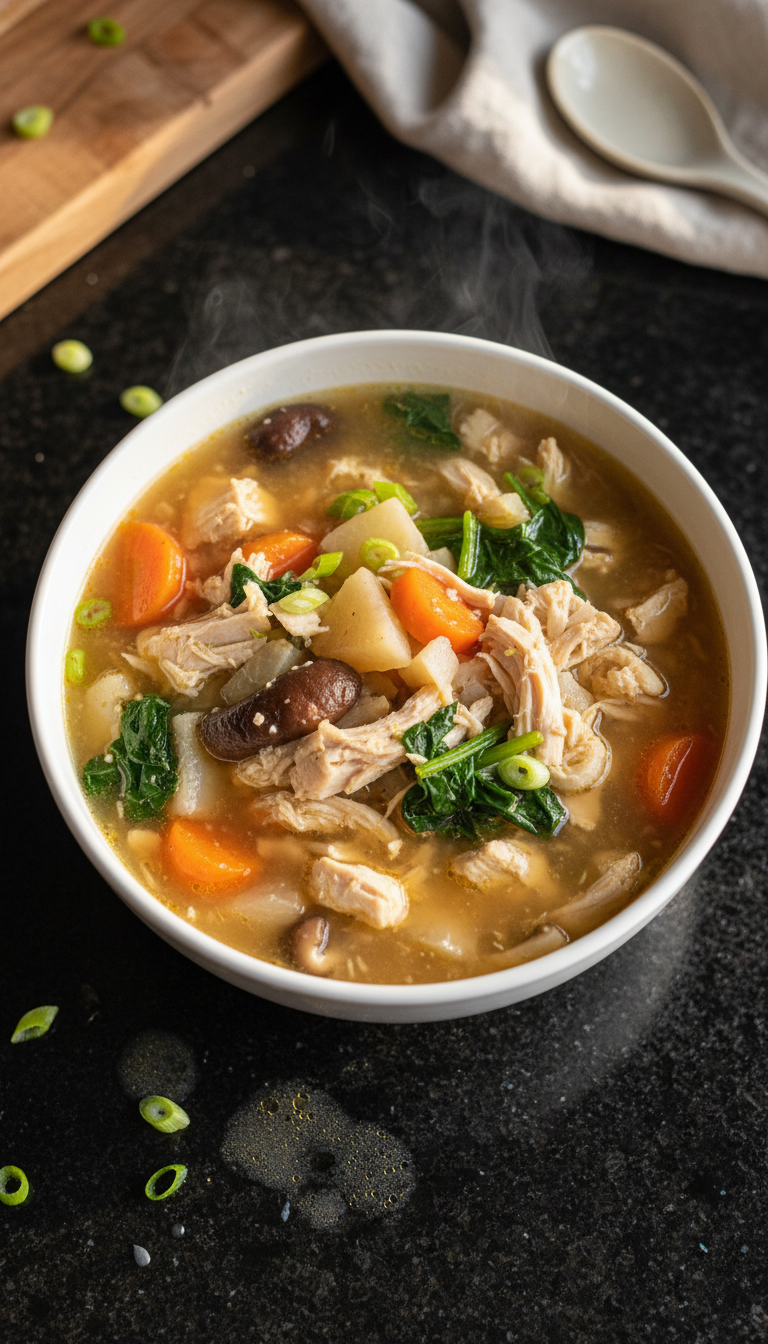
To serve your Chicken and Vegetable Miso Soup, consider garnishing with sliced green onions or a sprinkle of sesame seeds for added texture and flavor. A dash of chili oil can introduce a bit of heat, enhancing the overall experience. Pairing the soup with a side of steamed rice or a light salad can transform it into a well-rounded meal, perfect for lunch or dinner. I often enjoy a crispy bowl of rice on the side, allowing me to mix a bit into the soup for a unique bite.
If you’d like to enhance the protein content further, feel free to toss in some silken tofu cubes or even cooked shrimp just before serving. This additional protein complements the soup beautifully, making it heartier without overshadowing the other flavors. Experiment with these ideas to create your signature version of this delightful miso soup.
Adjusting for Dietary Needs
For those with dietary restrictions, this soup is easily modified. To make it gluten-free, choose a certified gluten-free miso paste and soy sauce if using. Vegetarians and vegans can substitute the chicken with mushrooms and additional tofu, creating a rich, satisfying dish that maintains the integrity of the original recipe.
If you're watching your sodium intake, be mindful of the type of miso you choose, as some varieties are saltier than others. Opt for low-sodium versions, and adjust the broth accordingly. You can also bulk up the soup with extra vegetables to make it filling without relying on excessive salt for flavor.
Common Challenges and Solutions
One common challenge when making miso soup is achieving the right balance of flavors. If your soup tastes too salty or overpowering, try adding a little more water or broth to dilute it, or incorporate more vegetables to balance the flavor profile. Taste as you go, adjusting the seasoning with care.
Another issue can arise with texture; if your vegetables end up mushy, they may have been overcooked. Remember to add quicker-cooking vegetables last and keep an eye on cooking times. A perfect vegetable will be tender yet still retain some bite, adding delightful contrast to the soup.