Crispy Lemon Zest Croissants
Highlighted under: Baking & Desserts
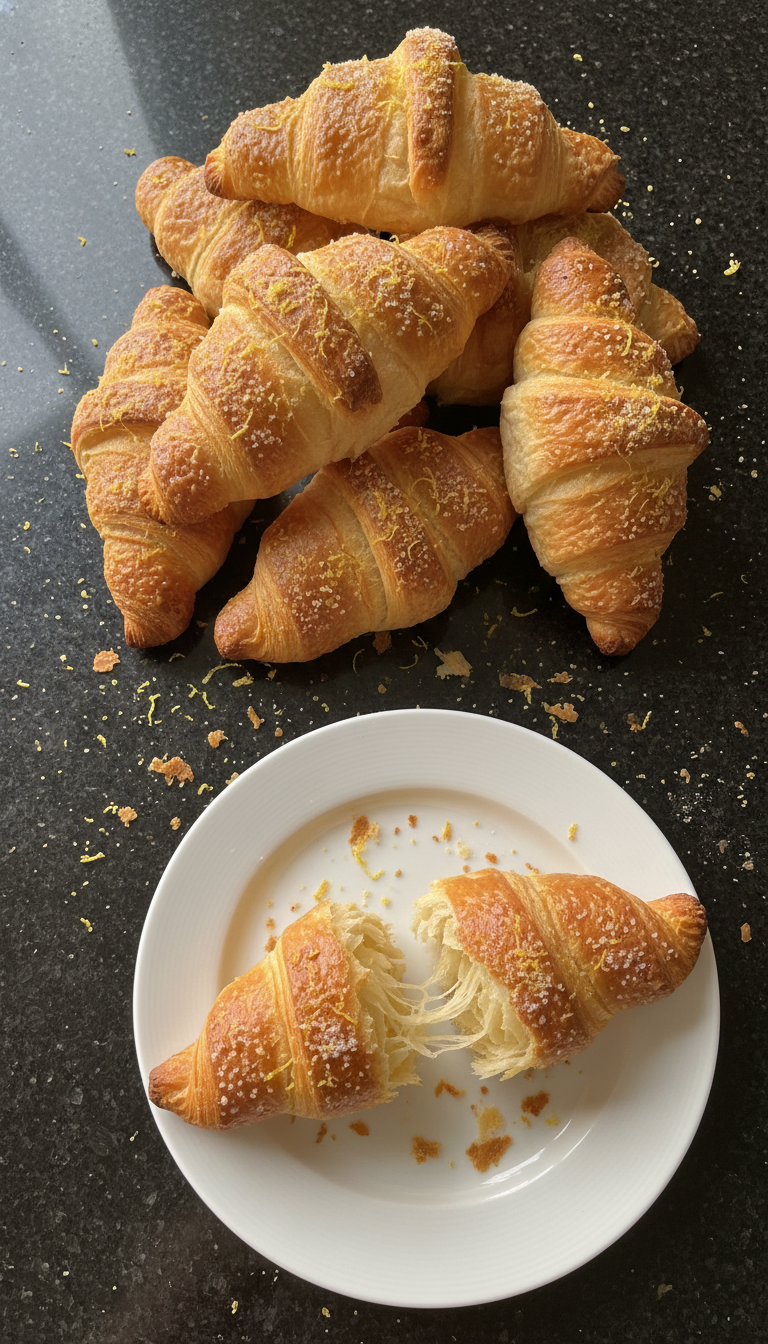
I absolutely love starting my mornings with these Crispy Lemon Zest Croissants. The delightful combination of buttery layers and zesty flavor makes them a perfect breakfast treat that never fails to uplift my spirits. Each bite is a crispy, flaky indulgence that transports me to a sunny French café. I always find that the addition of fresh lemon zest adds a bright twist, making these croissants not just delicious but also surprisingly refreshing. I can't wait for you to try them!
When I first experimented with these croissants, I was amazed at how the lemon zest brought a unique brightness to the classic flavor. I decided to try a different approach by incorporating zest into the dough itself, which imparted a subtle citrus aroma that perfectly complements the buttery pastry.
Another tip I discovered is to chill the dough carefully between folds to keep it flaky. This not only ensures that the layers remain distinct but also creates that irresistible crispness I'm always after. Trust me, giving these a try will elevate your mornings!

Why You Will Love This Recipe
- Crispy, flaky layers infused with fresh lemon zest
- Perfect balance of sweetness with a kiss of citrus
- Ideal for breakfast or a delightful snack anytime
Mastering the Dough
The foundation of a great croissant lies in the dough. Mixing the yeast with warm milk and sugar is crucial; you want it to become frothy, which indicates that the yeast is active and ready to work its magic. If your mixture doesn’t froth after five minutes, your yeast may be expired. Be sure to use fresh yeast to ensure proper rising in your croissants.
When adding flour to the yeast mixture, gradually incorporate it to avoid clumps. Knead the dough until it's smooth and elastic, about five minutes. If it feels sticky, it’s okay to sprinkle a bit more flour, but be careful not to add too much, as this can lead to dense croissants. A smooth dough will help achieve those coveted flaky layers.
After kneading, chilling the dough is essential. This short refrigeration not only relaxes the gluten but allows the butter to firm up, making the rolling and folding process more manageable. Aim for a dough that feels cool to the touch before you start incorporating the butter, which will help create that light, airy texture when baked.
Folding Technique
Incorporating the butter correctly is critical for fluffy, flaky layers. Make sure your butter is cold and cubed; this helps to create distinct layers during the rolling process. When rolling out the dough, ensure that it remains coated in flour to prevent sticking, but avoid using too much flour, as it can hinder the flakiness of the final croissant.
Folding the dough is where the magic happens. After enclosing the butter, rolling it out and folding it in thirds effectively creates multiple layers. Remember to chill the dough between each fold to keep the butter from melting. This ensures that once baked, the steam from the cold butter creates those beautiful pockets of air, giving you the flaky texture you desire.
Feel free to get creative with your folds! You can experiment with a book fold instead of a simple tri-fold for more layers, just make sure to chill it adequately between each round to maintain that structural integrity. The more folds you do, the flakier your croissants will be!
Baking to Perfection
Proper baking temperature is vital for achieving that golden-brown exterior. Preheating your oven to 400°F (200°C) ensures that the croissants can rise quickly and set into their shape. A baking stone can also be used to enhance heat distribution and create an even crust. If you find they’re browning too quickly, you can tent them with foil halfway through to prevent burning.
Using an egg wash before baking not only enhances appearance with a beautiful gloss but also helps with crust formation. For the best results, aim for a thin, even layer of the wash; it's the key to a visually appealing croissant. You can add a bit of sugar to the egg wash for an extra touch of sweetness and shine.
Let your croissants cool for a few minutes on a wire rack after baking. This step allows them to set and ensures that they maintain their flakiness. These croissants are delicious straight from the oven but also great when filled with cream or paired with a cup of coffee for a truly satisfying breakfast experience.
Ingredients
Ingredients
For the Dough
- 4 cups all-purpose flour
- 1/4 cup granulated sugar
- 1 tablespoon salt
- 1 cup unsalted butter (cold, cubed)
- 1 cup milk (warm)
- 2 teaspoons active dry yeast
- 1 tablespoon lemon zest
- 2 large eggs
For the Egg Wash
- 1 large egg
- 1 tablespoon milk
Instructions
Instructions
Steps
Prepare the Dough
In a bowl, combine warm milk, yeast, and sugar. Let it sit for 5 minutes until frothy. In a separate large bowl, mix flour, salt, and lemon zest. Add the yeast mixture and eggs, then mix until a dough forms. Knead for 5 minutes until smooth, then chill for 30 minutes.
Incorporate Butter
Roll the chilled dough on a floured surface into a rectangle, then place the cold, cubed butter in the center. Fold the dough over the butter, sealing the edges. Roll out again into a rectangle and fold in thirds. Repeat this process twice, chilling between each fold.
Shape the Croissants
Roll out the dough into a large rectangle, then cut into triangles. Roll each triangle from the base upwards to form a croissant shape. Place on a baking sheet and let rise for 30 minutes.
Bake
Preheat the oven to 400°F (200°C). Mix together the egg and milk for the wash, then brush over the croissants. Bake for 15 minutes or until golden brown. Let cool slightly before serving.
Enjoy!
Pro Tips
- For extra lemon flavor, consider adding a lemon glaze after baking. Simply combine powdered sugar with lemon juice and drizzle over the warm croissants.
Storing and Freezing
Crispy Lemon Zest Croissants are best enjoyed fresh, but they can be stored in an airtight container at room temperature for up to two days. If you want to keep them longer, consider freezing them. To freeze, let them cool completely, then wrap each croissant in foil or plastic wrap, and store them in a freezer bag for up to three months.
When you're ready to enjoy your frozen croissants, you can reheat them directly from frozen. Preheat your oven to 375°F (190°C) and bake them for about 15 minutes or until warmed through and crispy. This method helps revive the flaky texture and rids them of any sogginess.
For best results when reheating, avoid using a microwave, as this will make your croissants chewy rather than crispy. An oven or toaster oven restores the desired texture beautifully, making them as delightful as when they were first baked.
Flavor Variations
While the fresh lemon zest gives these croissants a refreshing twist, feel free to experiment with other flavorings. A teaspoon of orange zest can add a lovely citrus note, or try infusing the dough with a dash of vanilla extract for a deeper flavor profile. You can also sprinkle hints of cinnamon for a warm touch.
Another delicious variation involves adding a filling. Consider chocolate chips, almond paste, or even ham and cheese for breakfast croissants. Just be cautious to balance the fillings so they don’t overpower the delicate lemon flavor; a little goes a long way!
For a fun twist, you could also glaze your baked croissants with a light lemon icing made from powdered sugar and lemon juice. This adds an extra layer of sweetness and a beautiful finish, making each bite an indulgent experience!
Troubleshooting Tips
If you notice your croissants aren’t rising during baking, the most common cause is the dough not being cold enough during the folding process. Always ensure that both your butter and dough are properly chilled, and make sure to knead them adequately. If they do bake flat, they may also be a sign that your yeast wasn’t active enough; always check the yeast's freshness before starting.
If your croissants appear too dark on the outside but are still raw inside, consider baking at a slightly lower temperature, around 375°F (190°C), and extending the baking time. This allows for the interior to cook thoroughly while preventing the exterior from burning.
Lastly, if your croissants end up too dense, it may be due to overworking the dough or not allowing adequate resting time during the chilling phases. It's important to keep the dough cold and allow it plenty of time to relax its gluten for light, airy layers.
Questions About Recipes
→ Can I freeze these croissants?
Yes, you can freeze the unbaked croissants. Just shape them, place them on a baking sheet, freeze until solid, then transfer to a zip-top bag. Bake directly from frozen, adding a few extra minutes.
→ What type of butter is best?
Use high-quality unsalted butter for the best results as it allows you to control the saltiness of the dough.
→ How do I know when the croissants are done?
They should be a rich golden brown color. You can also tap the bottom; if it sounds hollow, they are likely done.
→ Can I use store-bought dough?
Yes, if you're short on time, using store-bought puff pastry can be a convenient option. Just remember to still add the lemon zest!
Crispy Lemon Zest Croissants
Created by: The Bitealchemy Team
Recipe Type: Baking & Desserts
Skill Level: Intermediate
Final Quantity: 12 croissants
What You'll Need
For the Dough
- 4 cups all-purpose flour
- 1/4 cup granulated sugar
- 1 tablespoon salt
- 1 cup unsalted butter (cold, cubed)
- 1 cup milk (warm)
- 2 teaspoons active dry yeast
- 1 tablespoon lemon zest
- 2 large eggs
For the Egg Wash
- 1 large egg
- 1 tablespoon milk
How-To Steps
In a bowl, combine warm milk, yeast, and sugar. Let it sit for 5 minutes until frothy. In a separate large bowl, mix flour, salt, and lemon zest. Add the yeast mixture and eggs, then mix until a dough forms. Knead for 5 minutes until smooth, then chill for 30 minutes.
Roll the chilled dough on a floured surface into a rectangle, then place the cold, cubed butter in the center. Fold the dough over the butter, sealing the edges. Roll out again into a rectangle and fold in thirds. Repeat this process twice, chilling between each fold.
Roll out the dough into a large rectangle, then cut into triangles. Roll each triangle from the base upwards to form a croissant shape. Place on a baking sheet and let rise for 30 minutes.
Preheat the oven to 400°F (200°C). Mix together the egg and milk for the wash, then brush over the croissants. Bake for 15 minutes or until golden brown. Let cool slightly before serving.
Extra Tips
- For extra lemon flavor, consider adding a lemon glaze after baking. Simply combine powdered sugar with lemon juice and drizzle over the warm croissants.
Nutritional Breakdown (Per Serving)
- Calories: 250 kcal
- Total Fat: 15g
- Saturated Fat: 9g
- Cholesterol: 80mg
- Sodium: 150mg
- Total Carbohydrates: 28g
- Dietary Fiber: 1g
- Sugars: 8g
- Protein: 5g